
发布日期:2026-09-20
Today I Know at Last That I Am Myself
Today I Know at Last That I Am Myself
发布日期:2026-09-23 11:49

The Entrepreneurial Paradox
of the AI Age
Peter Thiel's Zero to One is read everywhere in business, and its argument comes down to four words: competition is for losers. That is not cynicism. It is arithmetic. Competition drives prices toward cost until excess profit disappears, so durable rent exists only where competition does not.
The entrepreneur's task, then, is not to run faster than everyone else in the same race. It is to leave the race altogether: to build something no one has built, and then to build walls around it that no one can climb. Monopoly, as Thiel says, is the condition of every successful business. The discipline we study, in the end, is mostly a manual for building walls.
Then the world turned over. We now have AI, an enabler unlike anything before it. Sam Altman has pointed out that what took a 2005 YC company three months to build, a coding agent now does in seven minutes. Programming, design, research, copywriting, distribution—each was once a gate that could stop a person cold. Every one of those gates now stands open. This is why Altman says there has never been a better time to start a company. He has even taken bets on when the first one-person company will be worth a billion dollars.
NUS EMBA
And yet the story cannot hold itself together. The technology that empowers you empowers everyone else. Gaps close as fast as they open. Innovations are copied and surpassed. The window of advantage narrows, and even the narrowest niche fills with competitors. AI appears to make us capable of anything, and by the same mechanism it makes our capabilities nearly worthless. A valuation is only the discounted value of future profit, and profit, in a world of infinite supply, is bound to evaporate.
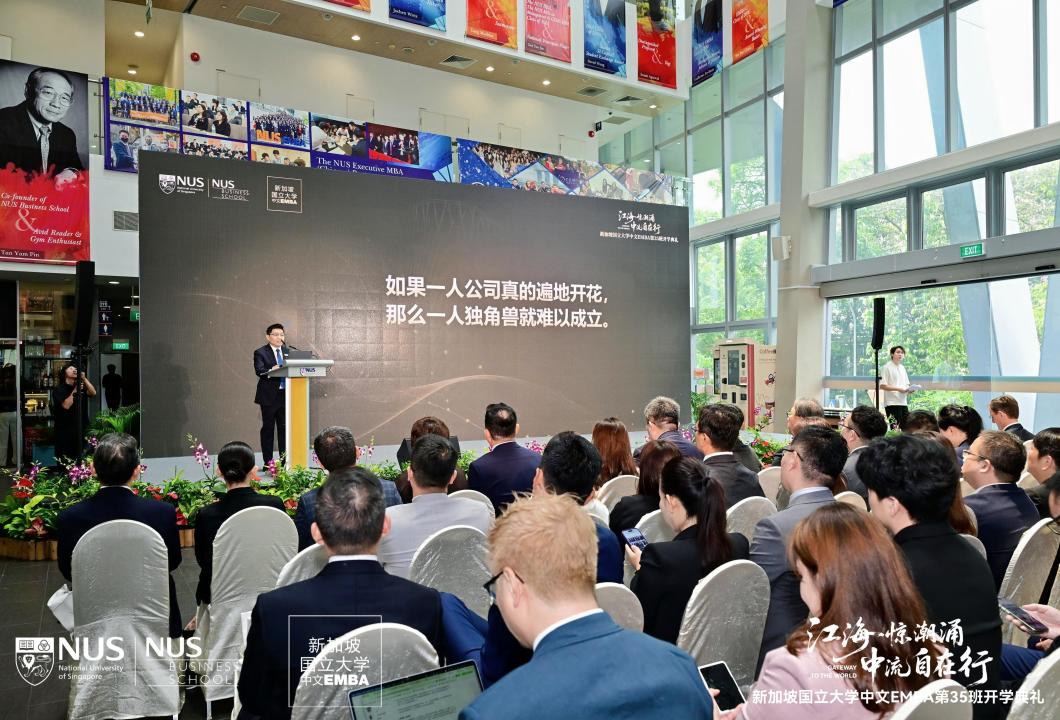
So here is the paradox of entrepreneurship in the age of AI: if one-person companies truly blossom everywhere, then the one-person unicorn becomes untenable.
What counts as a moat now? We have heard the answers—proprietary data, network effects, brand, distribution, organizational capability. And when those fail, we are told that taste, judgment, and vision are the human faculties no machine can reach. Notice what these answers have in common. Each names something AI cannot do yet, and then assumes the frontier will stop moving. It never has. Go, programming, writing, pure mathematics—each time the boundary was declared permanent, and each time it fell.
If every wall comes down, if no profit can be held, then let me ask you directly: what is entrepreneurship for? Why do we still set out?
This is the most serious question in business today, and I have never heard an answer that convinced me.
From Entrepreneurship Back
to the Human Being
Perhaps we have been asking the wrong question all along. We measure entrepreneurship by what it earns, reducing the discipline into a manual for success, and we have never asked what it means as a human practice.
Political thinker Hannah Arendt gave us a concept that fits this moment exactly: natality. Every birth, she wrote, is a new beginning, and so the capacity to begin is what makes us human. To be human is to be able to begin. Beginning has never meant knowing how things will turn out. A real beginning is an act of walking into the unknown.
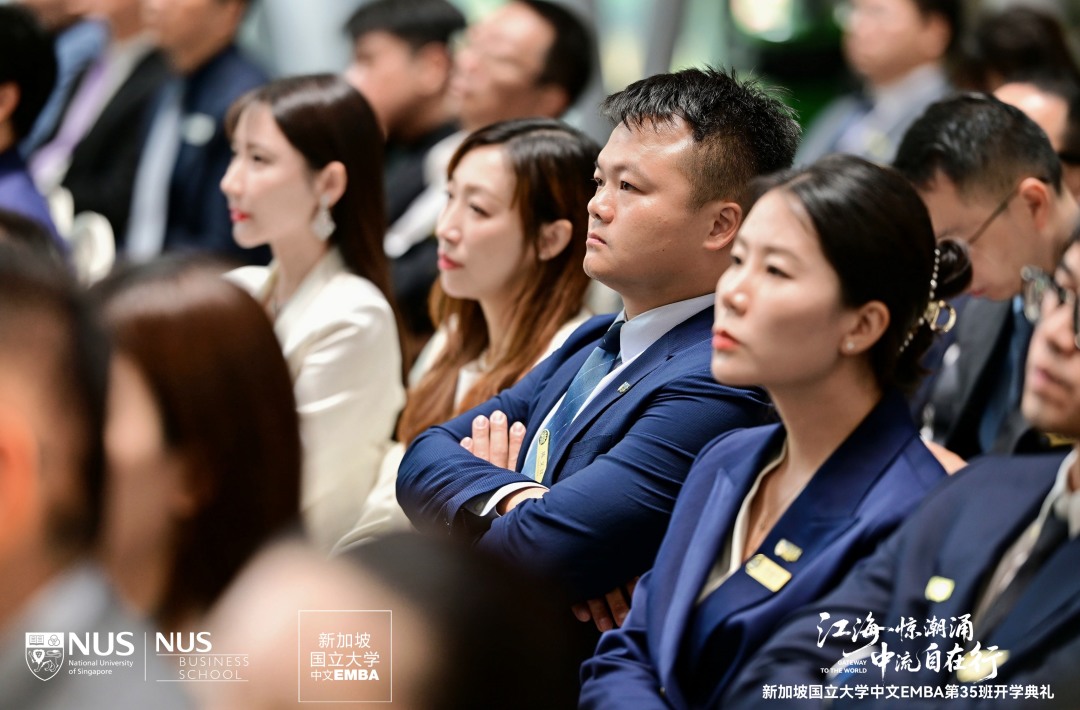
Seen this way, what matters most about entrepreneurship may not be building an everlasting empire. It may simply be just to begin. You see a product that does not exist, a need no one has met, a way of living unlike the one in front of you; and you act, and it enters the world. Whether or not it becomes a unicorn, the world has already been moved off its previous course.
If natality is something we are born with, what is different about this moment? AI does not give us the capacity to begin. What it does is make beginning far less costly. You may no longer need capital, an organization, a platform, or decades of experience to turn an idea into something real. What used to be the privilege of a few can become an ordinary human practice: a mode of living available to far more people.
In economic terms, this is the collapse of barriers. In human terms, it is the democratization of creation.
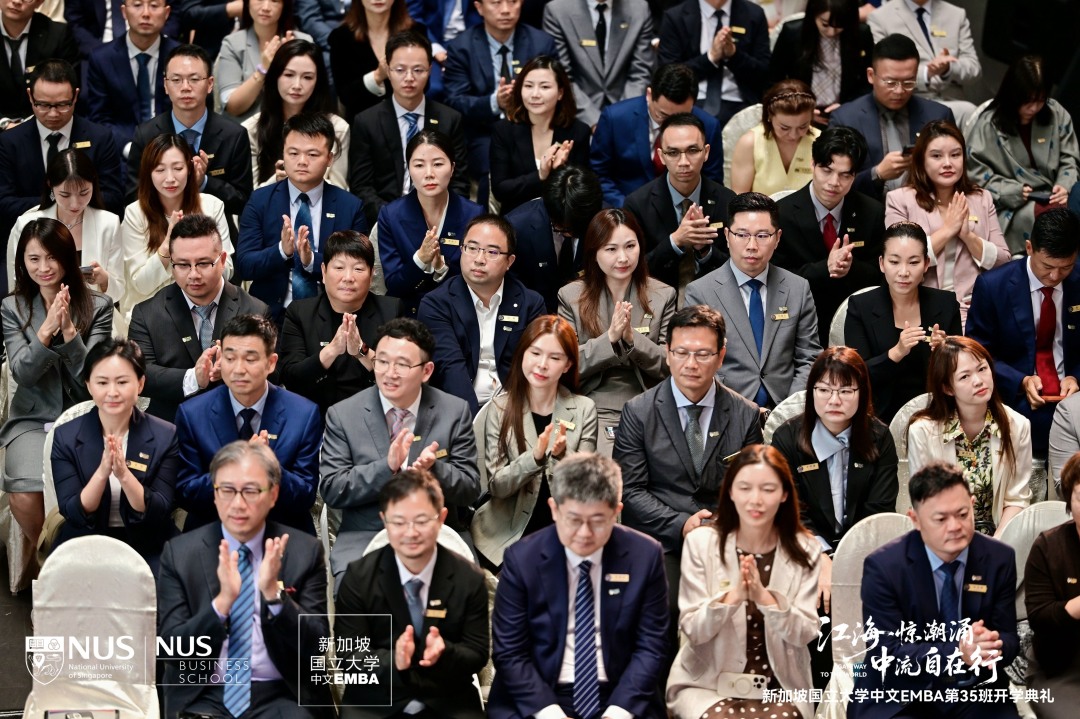
And when one-person companies are everywhere, the market stops being a collision between organizations and becomes an encounter between individuals. Entrepreneurship as a field, and management as a discipline, will have to change accordingly. Management has always begun with the organization. It will have to begin with the person.
So what does it mean to be a person?
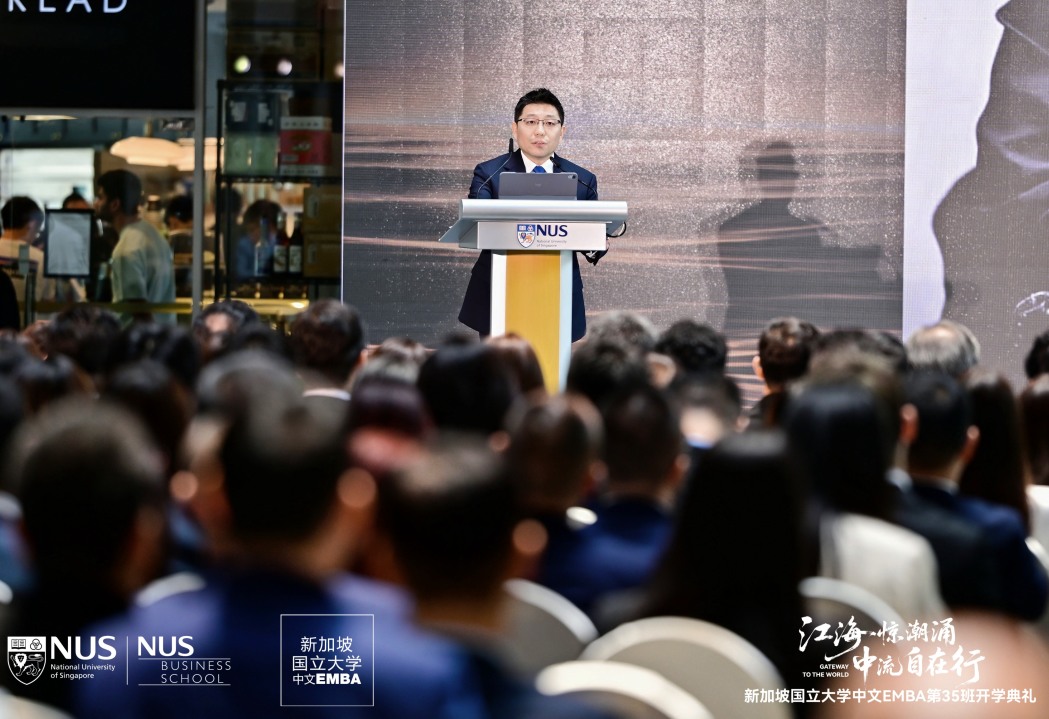
To answer that I want to follow Arendt's intellectual tradition upstream, to its source in twentieth-century European thought: Edmund Husserl. What Husserl changed, I think, was where philosophy begins.
For most of history we have defined ourselves by looking outward. In the age of religion, we understood ourselves through God. In modern life, we understand ourselves through wealth, profession, status, and the people around us. Husserl turned philosophy back toward lived experience—toward how an actual person meets the world, perceives it, and makes sense of it.
Let me borrow three of his terms. I should say plainly that I am reading him through those who came after him, and not strictly in his own sense.
The first is intentionality. Consciousness is never sealed off and never empty. Consciousness is always consciousness of something, always reaching toward the world. And meaning appears in that reaching, in the act of perceiving, experiencing, understanding.
Which leads to the second: constitution. Meaning is not a finished object waiting quietly to be found. It takes shape as we engage the world.[1]
And so to the third: inter-subjectivity. None of this is a monologue. We share the world with others, and it is in the mutual reflection of our actions, our experience, and our feeling that we keep testing and correcting what we believe about the world and about ourselves.
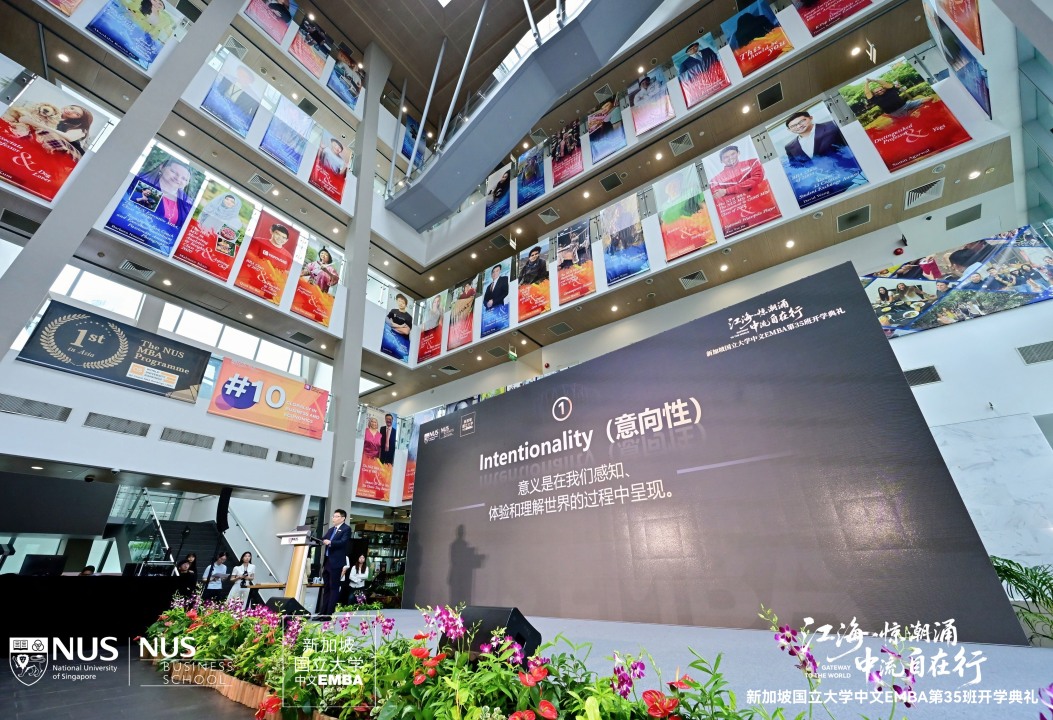
Entrepreneurship is a practice of an unusual kind. You hand your understanding of the world to the world, and then you wait for an honest answer. The market does not ask your motives. It does not credit your effort. It does not care who you hoped to be. It asks one question, over and over: is the world really as you think it is? Accepted, rejected, revised, begun again: what iterates is not only the product and the business model. It is your understanding of yourself, and finally the constituting of yourself.
The value of AI perhaps reaches far beyond productivity. What matters more is the freedom it confers and the possibilities it unfolds. If people no longer depend on platforms, if organizations are no longer the necessary channel between a person and the world, then entrepreneurship may cease to be only a way of making money. Its true worth is to open a door for far more people, offering a path to commit themselves to the real world, and to exist in it in a form that is entirely their own.
When Altman says this is the best time ever to start a company, the claim may be anthropological rather than commercial. Building a unicorn has not become easier. But creation can now become a way of living, and even a way of being, for far more of us.
Today I Know at Last
That I Am Myself
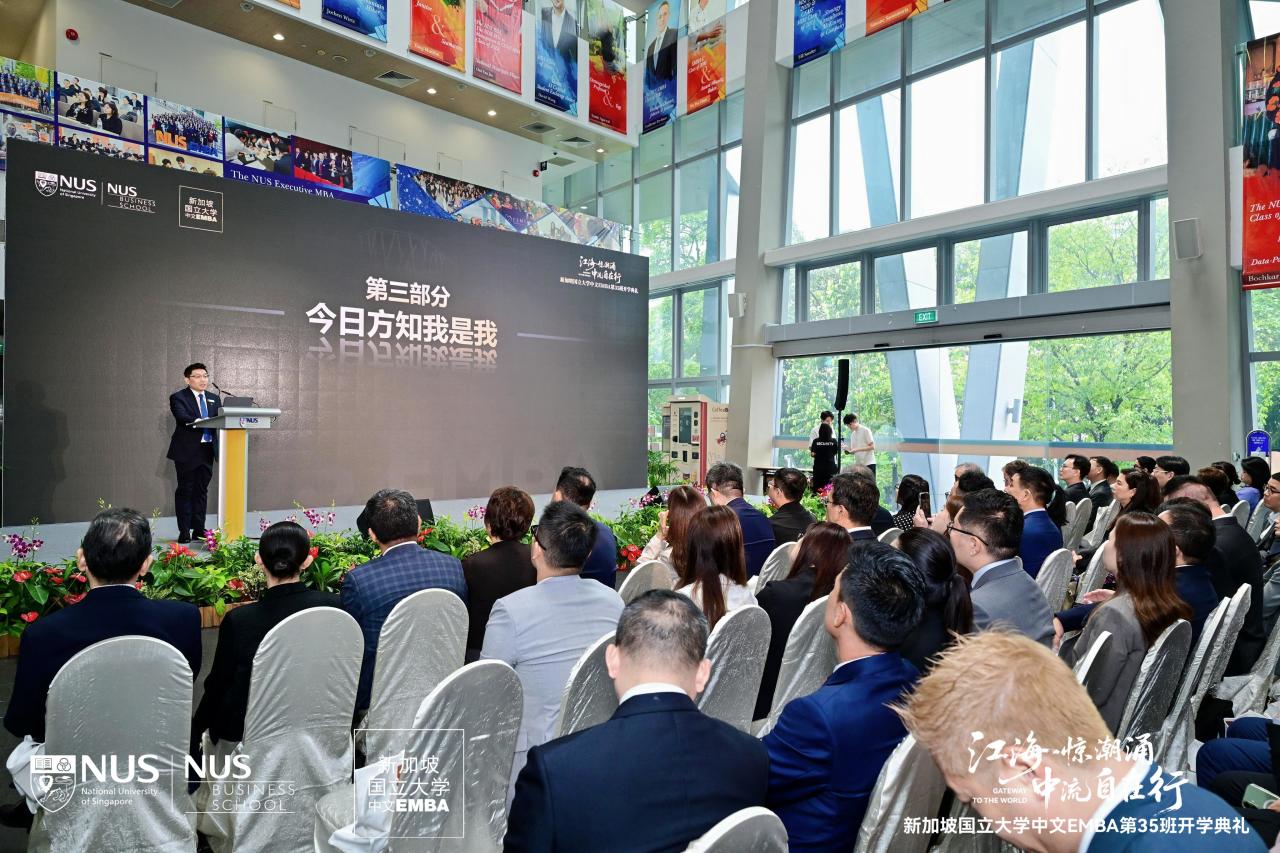
At the opening ceremony for Intake 33, I quoted a question Henry Kissinger raised near the end of his life. The printing press spread philosophical insight; the Enlightenment followed; the freeing of thought gave us the nerve to investigate nature, which produced the scientific revolution and the modern world we inherited. Our own age, he warned, runs the other way: “it has generated a potentially dominating technology in search of a guiding philosophy.”[2]
Two years ago that frightened me. What values could let us govern a technology moving this fast? What philosophy could defend human dignity in the age of AI? Without something to navigate by, would we simply be carried along by the rush of technology?
I think we have been imagining philosophy as an oracle handed down from above. We wait for the next Kant. We hope for another Enlightenment. We want a finished system we can follow like a map into a country we have never seen.
I have come to believe something else:
Guiding philosophy is not given; it is constituted.
The philosophy of an age is not revealed to it. It comes from our engagement with the world. It comes from what happens between living people: their meetings, their collisions, the offense they give each other, and the empathy they share. It comes from the meaning we constitute together as we begin, fail, create, and begin again.
I am no longer anxious. AI may allow many more people to hand their imagination to the world and to experience their own existence on their own terms. I have stood at this podium for seven years, and what I have learned is much the same: what mattered was never the doctrine I thought I knew in advance; meaning has always emerged from the search itself.
Which brings me to a question closer to today. If AI is making knowledge and intelligence so much easier to obtain, why do we still need to gather here?
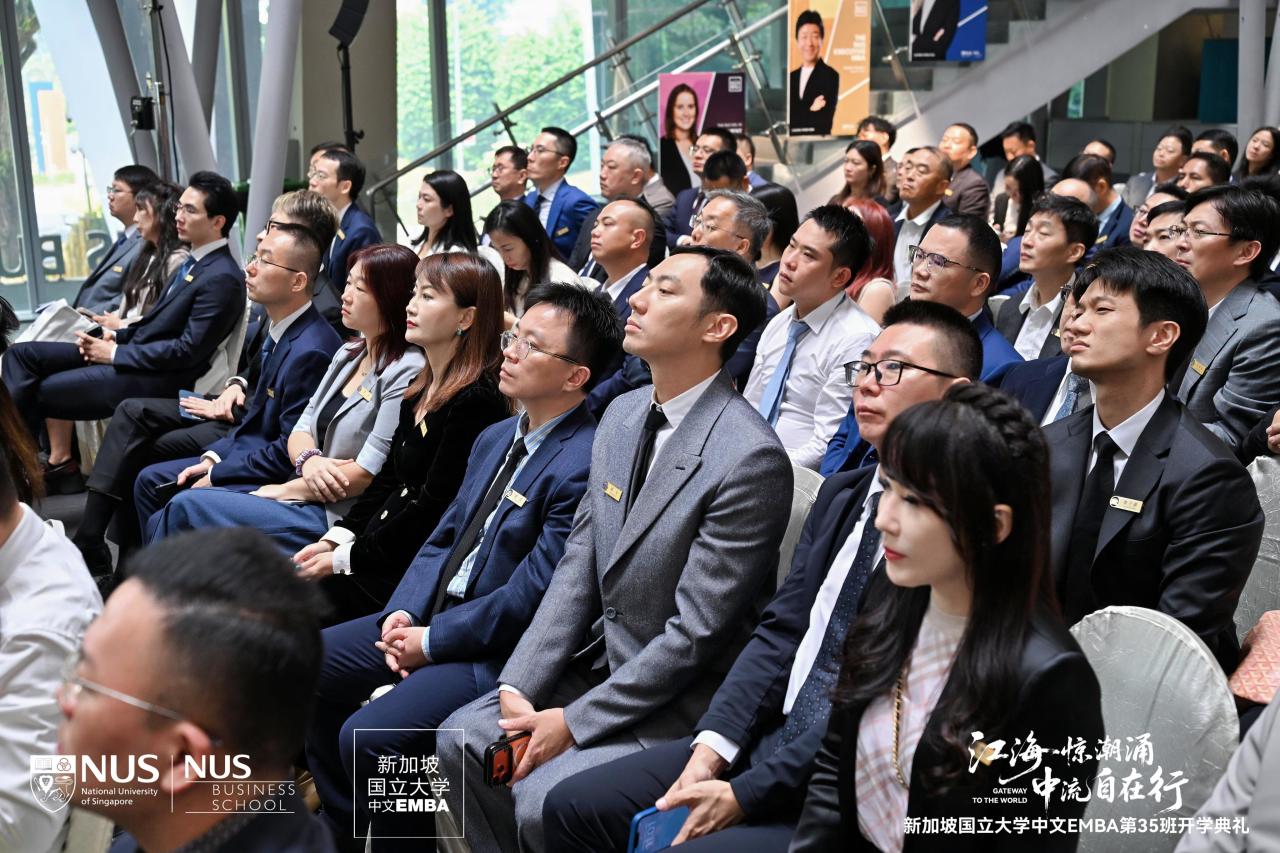
Let me answer with what I think is one of the finest passages in Chinese literature.
Lu Zhishen, in Water Margin, spent his life in motion. He was an army officer, a monk, a fugitive, an outlaw. He accepted the imperial amnesty and fought the court's wars. He drank, he brawled, he killed men, he saved others. At the end he came to the Liuhe Temple in Hangzhou. One night the tide of the Qiantang River came in like thunder. He woke, took it for war drums, seized his staff and made for the door. The monks told him: those are not drums. That is the tide.
Lu Zhishen laughed aloud, and left his final verse before his departure:
All my life I cultivated no merit,
I loved only killing and burning.
Suddenly the golden cord springs loose,
here the jade lock is torn apart.
Ah—the tide comes in on the Qiantang,
and today I know at last that I am myself.
Most of a life is spent answering. Look at his. The tonsure was Squire Zhao's idea. The name Zhishen was Abbot Zhizhen's hope for him. The move to the Great Xiangguo Temple was Abbot Zhizhen's arrangement. Taking to the greenwood was what a man does when he has nowhere left to go. The amnesty was the decision of the brotherhood. The campaigns were the court's orders. Each time, a voice told him who he was and where to go. That night there was one more call to arms, but it was only the tide.
The tide is simply itself. Its meaning belongs to the one who hears it.
We measure worth by numbers. We take our identity from the labels society gives us. We build confidence on the approval of authority. We pursue excellence through competition with others. But technological progress keeps overturning the rules that markets and societies run on. Commercial value is being rewritten. Social ladders are collapsing. Organizational boundaries are dissolving. When the coordinates that once helped us navigate disappear one by one, will we still find where we stand? When the tide of this era washes every label off you, how will you define yourself once more? As technology unfolds infinite possibilities, will you still know what commands your loyalty, where your love rests, what care holds you fast, and what faith you will bear?
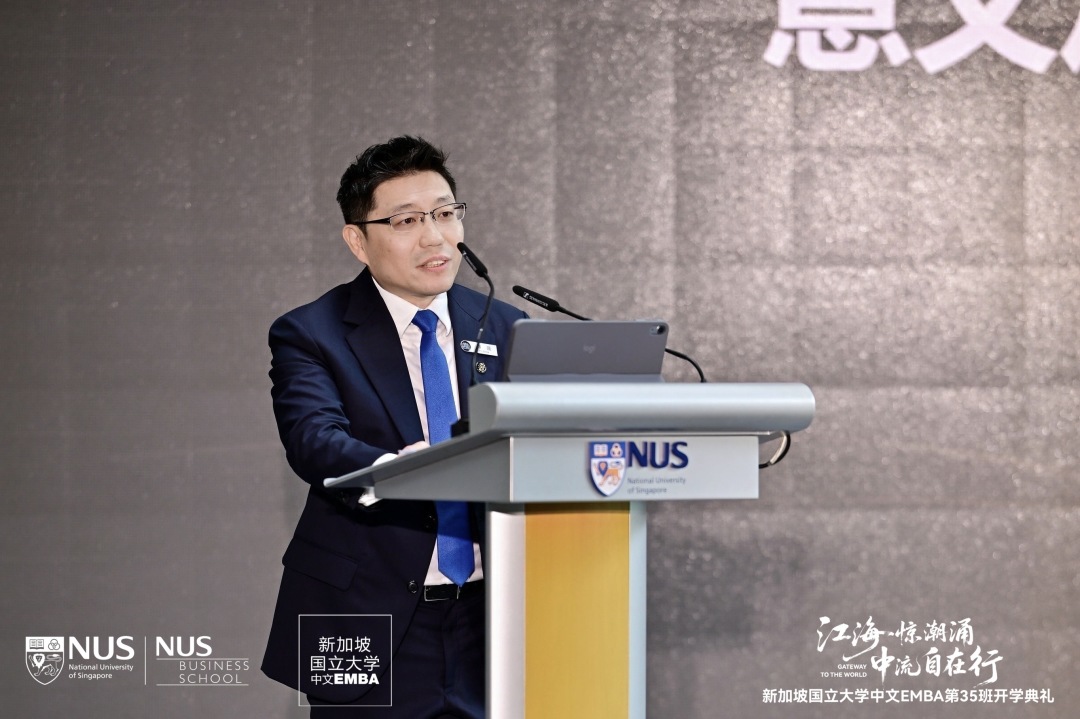
That, I think, is why we gather here today. Do not let an NUS EMBA become one more label you wear. Please cherish this rare privilege of stepping off the laid-out track: to embrace souls utterly unlike your own, to dwell on questions once unthinkable, to touch possibilities once overlooked, and to venture into a world of rich variety and boundless difference.
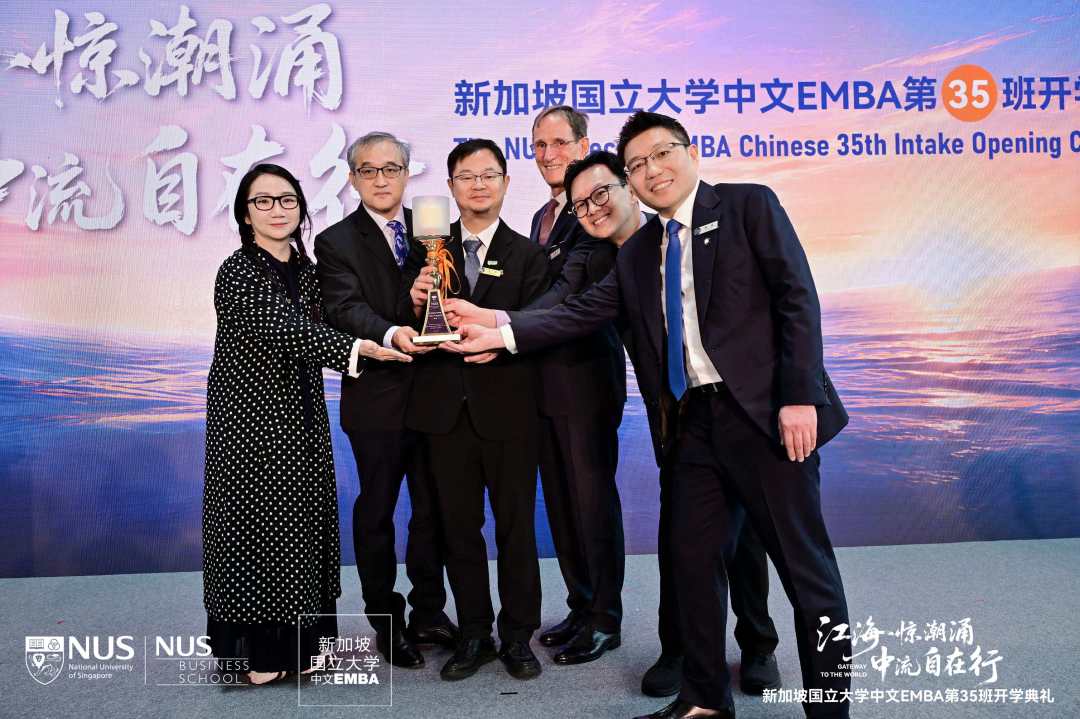
May this journey, which begins here at NUS, be a beginning we share.
Annotation:
[1]In Husserl's transcendental phenomenology, Konstitution concerns how objects are given to consciousness and how meaning is established within the intentional correlation—not as I use it here, the emergence of meaning through practice in the world. Reading constitution as a practical, worldly activity belongs to the tradition Husserl opened rather than to Husserl himself: to Heidegger's Zuhandenheit, and to Merleau-Ponty's account of embodied subjectivity, among others. What I draw on is that tradition's insight, as an interpretation suited to our present context rather than a reconstruction of Husserl's own thought.
[2]Henry Kissinger, “How the Enlightenment Ends.” The Atlantic, June 2018.
分享到: